
José Becerra
Español
José Becerra, MD, MPH, FACPM, es investigador, médico jubilado y estudiante de las disciplinas del espíritu. Su obra la unifica una vocación hermenéutica: una mirada interpretativa, ascendente e integradora, que desde The Psychocentric Revelation (1985) descodifica la realidad valiéndose de la analogía y la anagogía para tender puentes entre la ciencia, la historia y el esoterismo transhimaláyico.
Cofundó en 1999 el Centro de Estudios Vicente Beltrán Anglada, dedicado a la praxis del Agni Yoga y a la implementación del Triple Proyecto Jerárquico: el reconocimiento del Reino de Shamballa y la exteriorización de la Jerarquía; la revelación de la Madre del Mundo, el Reino de los Ángeles, considerado la energía potencial de la Creación; y el servicio a la humanidad mediante la Magia Blanca Organizada Planetaria. Tras jubilarse en 2014 de una carrera dedicada a la epidemiología matemática, se ha ocupado del Quadrivium clásico y de la evolución de la conciencia, materia de The Centennial Conclave: Shamballa 2025. Desde 2026 escribe en Substack, en The Shamballa Observatory, con el propósito declarado de traducir el lenguaje abstracto del esoterismo a un idioma que cualquier lector informado pueda seguir; allí trabaja sobre la ciencia de la evolución social y sobre el antahkarana, el puente de conciencia que une la mente concreta con la abstracta y enlaza la personalidad con el alma.
La vocación hermenéutica
La hermenéutica es el arte de la interpretación. Nació aplicada a los textos sagrados y desde el siglo XIX abarca también los símbolos, los acontecimientos históricos y las culturas enteras. Su pregunta no es solamente qué ocurrió, sino qué significa lo que ocurrió. Un historiador convencional describe un programa cultural, una institución o una fecha; estos libros preguntan qué significan dentro de un proceso más amplio. Ese «qué significa» ya es hermenéutica.
A esa disciplina se añaden dos operaciones que conviene nombrar, aunque los libros las practiquen más de lo que las mencionan.
La analogía consiste en comprender una realidad por su semejanza con otra. No afirma identidad sino correspondencia: cuando se dice que el corazón es una bomba, nadie piensa en una bomba metálica. En filosofía evita dos extremos —que todo sea igual o que nada guarde relación— y busca semejanzas significativas. En estos libros se establecen entre un pueblo y la humanidad, entre un proyecto cultural y un proceso iniciático, entre una pedagogía y una disciplina del alma, entre una forma de gobernar y una forma de servir. Ninguna de esas relaciones afirma que las dos cosas sean lo mismo: afirma que funcionan de manera semejante. Y el equilibrio consiste en evitar los dos errores simétricos: reducirlo todo a historia y política, o convertir toda la historia en símbolo espiritual. La analogía no reemplaza a la historia; la ilumina.
La anagogía —del griego anagoge, elevar o conducir hacia arriba— era en la tradición medieval el cuarto de los sentidos de lectura, después del literal, el alegórico y el moral. Jerusalén podía significar la ciudad histórica, la Iglesia, el alma humana y la Ciudad Celestial, y el último de esos sentidos era el anagógico. Aplicada aquí, no consiste en abandonar la historia sino en preguntarle qué significado superior puede revelar: qué nos dice sobre la evolución de la conciencia, qué propósito podría estar manifestándose a través de los acontecimientos. Es una elevación del horizonte interpretativo, no una sustitución del relato.
De dónde viene: 1985
Esa vocación no es un añadido tardío. Estaba consolidada ya en el primer libro del autor, The Psychocentric Revelation, cuya estructura original de 1985 la despliega en tres ejes.
La hermenéutica como puente entre ciencia y filosofía. Desde el comienzo, la obra no busca un misticismo aislado sino una interpretación que expanda la ciencia convencional. Su primera parte, «The Search for Certainty in Science», disecciona las limitaciones metodológicas de la ciencia cuantitativa y de la causalidad mecánica, y propone el «Principio de Certeza del Alma» como llave interpretativa para entender el mundo posmoderno inaugurado por la liberación de la energía atómica.
La analogía, del átomo al cosmos. Es el motor que permite conectar planos distintos de la realidad sin confundirlos: el lenguaje simbólico para proponer el espacio como entidad viva y etérica, y el paralelismo entre las leyes de la física macroscópica y microscópica y los fundamentos científicos de la fraternidad humana.
La anagogía, o la evolución ascendente de la conciencia. Se despliega en la tercera parte, «A Hierarchy of Life», donde un enfoque de sistemas generales traza una línea evolutiva que va de los mecanismos más básicos de la materia hasta la evolución de la conciencia y la relación con los «Hermanos Mayores».
Cuarenta años después, los libros del autor aplican ese mismo método integrador —unir historia, ciencia y esoterismo transhimaláyico— a objetos de estudio nuevos. Lo que cambia es la materia; el procedimiento es el de siempre, y su rasgo distintivo no es el uso de la analogía o de la anagogía por separado sino el orden en que se emplean: primero se reconstruyen los hechos con disciplina documental, luego se interpreta su significado cultural, y sólo después se propone una lectura filosófica y espiritual. Ese movimiento gradual es lo que permite discutir estos libros en lugar de tener que aceptarlos o rechazarlos enteros.
Contacto
Puede escribir al autor a jb@NGSM.org.
Perfil profesional: linkedin.com/in/jbecerramd
Blogs: The Shamballa Observatory · hierarchicaldemocracy.blog · agniyoga.info
Libros: transhimalayica.mx/autor/jeb
Publicaciones esotéricas: jebmd-author-jb.share.connect.posit.cloud
English
José Becerra, MD, MPH, FACPM, is a researcher, retired physician, and student of the spiritual disciplines. His work is unified by a hermeneutic vocation: an interpretive lens, upward‑reaching and integrative, which since The Psychocentric Revelation (1985) decodes reality by means of analogy and anagogy in order to build bridges between science, history, and Trans‑Himalayan esotericism.
In 1999 he co‑founded the Vicente Beltrán Anglada Study Center, devoted to the practice of Agni Yoga and to the implementation of the Threefold Hierarchical Project: recognition of the Kingdom of Shamballa and the externalization of the Hierarchy; revelation of the Mother of the World, the Kingdom of the Angels, understood as the potential energy of Creation; and service to humanity through Organized Planetary White Magic. After retiring in 2014 from a career in mathematical epidemiology, he has turned to the classical Quadrivium and to the evolution of consciousness, the subject of The Centennial Conclave: Shamballa 2025. Since 2026 he has written on Substack, at The Shamballa Observatory, with the declared aim of translating the abstract language of esotericism into one that any informed reader can follow; there he works on the science of social evolution and on the antahkarana, the bridge of consciousness that links the concrete mind to the abstract and binds personality to soul.
The hermeneutic vocation
Hermeneutics is the art of interpretation. It began as the reading of sacred texts and, since the nineteenth century, has extended to symbols, historical events, and entire cultures. Its question is not only what happened, but what what happened means. A conventional historian describes a cultural program, an institution, or a date; these books ask what they mean within a wider process. That “what it means” is already hermeneutics.
Two further operations deserve naming, though the books practise them more than they mention them.
Analogy consists in understanding one reality through its likeness to another. It asserts not identity but correspondence: when we say the heart is a pump, no one imagines a metal pump. In philosophy it avoids two extremes — that everything is the same, or that nothing is related — and looks instead for meaningful likeness. In these books such likenesses are drawn between a people and humanity, between a cultural project and an initiatory process, between a pedagogy and a discipline of the soul, between a way of governing and a way of serving. None of those relations claims the two things are identical; each claims they work in comparable ways. And the balance consists in avoiding the two symmetrical errors: reducing everything to history and politics, or turning all history into spiritual symbol. Analogy does not replace history; it illuminates it.
Anagogy — from the Greek anagoge, to lift or lead upward — was in the medieval tradition the fourth sense of reading, after the literal, the allegorical, and the moral. Jerusalem could mean the historical city, the Church, the human soul, and the Celestial City, and the last of these was the anagogical sense. Applied here, it does not mean abandoning history but asking what higher meaning history may disclose: what it tells us about the evolution of consciousness, what purpose may be unfolding through events. It raises the interpretive horizon; it does not substitute for the account.
Where it comes from: 1985
This vocation is no late addition. It was already consolidated in the author’s first book, The Psychocentric Revelation, whose original 1985 structure sets it out along three axes.
Hermeneutics as a bridge between science and philosophy. From the outset the work seeks not an isolated mysticism but an interpretation that expands conventional science. Its first part, “The Search for Certainty in Science,” dissects the methodological limits of quantitative science and mechanical causality, and proposes the Soul’s Certainty Principle as an interpretive key for understanding the post‑modern world inaugurated by the release of atomic energy.
Analogy, from atom to cosmos. It is the engine that connects distinct planes of reality without confusing them: symbolic language to propose space as a living, etheric entity, and a parallel drawn between the laws of macroscopic and microscopic physics and the scientific foundations of human brotherhood.
Anagogy, or the ascending evolution of consciousness. This unfolds in the third part, “A Hierarchy of Life,” where a general‑systems approach traces an evolutionary line from the most basic mechanisms of matter to the evolution of consciousness and the relationship with Our Elder Brothers.
Forty years on, the author’s books apply that same integrative method — joining history, science, and Trans‑Himalayan esotericism — to new subjects. The material changes; the procedure does not. And its distinctive feature is not the use of analogy or anagogy separately, but the order in which they are employed: first the facts are reconstructed with documentary discipline, then their cultural meaning is interpreted, and only then is a philosophical and spiritual reading proposed. That gradual movement is what makes these books arguable, rather than something to be accepted or rejected whole.
Contact
Write to the author at jb@NGSM.org.
Professional profile: linkedin.com/in/jbecerramd
Blogs: The Shamballa Observatory · hierarchicaldemocracy.blog · agniyoga.info
Books: transhimalayica.mx/autor/jeb
Esoteric publications: jebmd-author-jb.share.connect.posit.cloud
-

Triple Proyecto Jerárquico
por José Becerra
ISBN: 979-8187518692
Fecha de publicación: 16 de julio de 2026
148 págs. | 6 x 9 pulgadas -

Operación Serenidad 2025
por José Becerra
ISBN: 979-8275272956
Fecha de publicación: 20 de noviembre de 2025
270 págs. | 6 x 9 pulgadas -
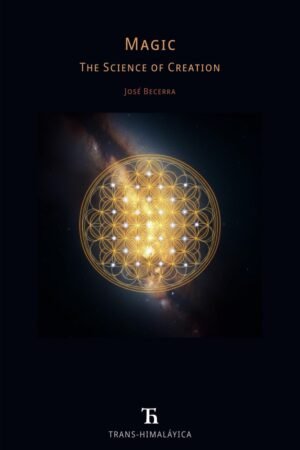
Magic: The Science of Creation
by José Becerra
ISBN: 979-8319415011
Date of publication: March 14, 2025
215 pp. | 6 x 9 in -

Journey Records: Vicente Beltrán-Anglada in North America
by Luis Alejandro Hernández Ríos, José Becerra (trad.)
ISBN: 979-8319308481
Publication date: April 2025
242 pp. | 6 x 0.55 x 9 in -

The Thing
by José Becerra
ISBN: 979-8316514670
Fecha de publicación: 3 abril de 2025
74 pp. | 5 x 0.16 x 8 in. -

Agni Yoga y los Misterios Iniciáticos
por Vicente Beltrán Anglada, José Becerra (Ed.)
ISBN: 979-8316134083
Fecha de publicación: 30 de marzo de 2025
140 págs. | 13.5 x 20.25 cms -

Cosología: Sobre la cosa
por José Becerra
ISBN: 979-8315936497
Fecha de publicación: 28 marzo de 2025
74 págs. | 5 x 0.16 x 8 pl. -

The Way to Shamballa: Agni Yoga
by José Becerra
ISBN: 979-8314075678
Date of publication: March 14, 2025
228 pp. | 6 x 9 in -

A Little Book of Magic
by José Becerra
ISBN: 979-8313579221
Date of publication: March 14, 2025
122 pp. | 4 x 6 in -

Shamballa: The White Island
by José Becerra
ISBN: 979-8309551743
Date of publication: February 7, 2025
176 pp. | 6 x 0.4 x 9 in -

Vicente Beltrán-Anglada: An Ibero-American Disciple
by Vicente Beltrán Anglada, José Becerra (Ed.)
ISBN: 979-8332960932
Date of publication: August 15, 2024
197 pp. |6 x 0.45 x 9 in -
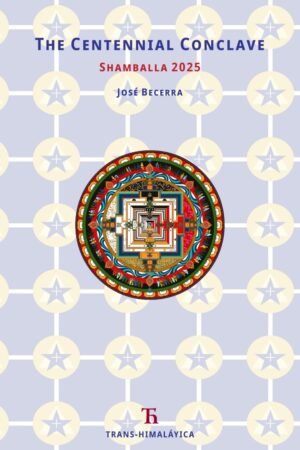
The Centennial Conclave: Shamballa 2025
by José Becerra
ISBN: 979-8879103533
Date of publication: August 9, 2024
263 pp. | 6 x 9 in -
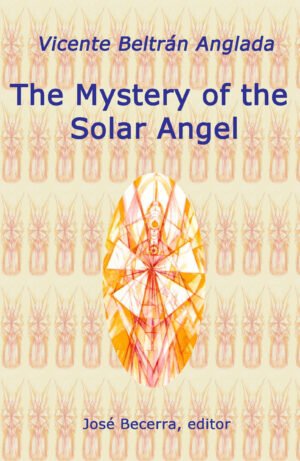
The Mystery of the Solar Angel
by Vicente Beltrán Anglada, José Becerra (Ed.)
ISBN: 979-8880320349
Date of publication: February 12, 2024
111 pp. | 5.25 x 8 in | 195 gms -

The Psychocentric Revelation
by José Becerra
ISBN: 979-8315063759
Date of publication: February 12, 2024
140 pp. | 6 x 9 in -

Aprendiendo el arte de morir
por José Becerra
ISBN: 979-8878675468
Fecha de publicación: 4 febrero de 2024
164 págs. | 13.5 x 20.25 cms